The Button Marked Auto Has an Owner
Millions of programmers let a setting called Auto decide which AI answers them. More and more often it picks Grok, sold as the AI that tells the truth other machines won't, and owned by a man whose company writes its instructions and now owns the program too.
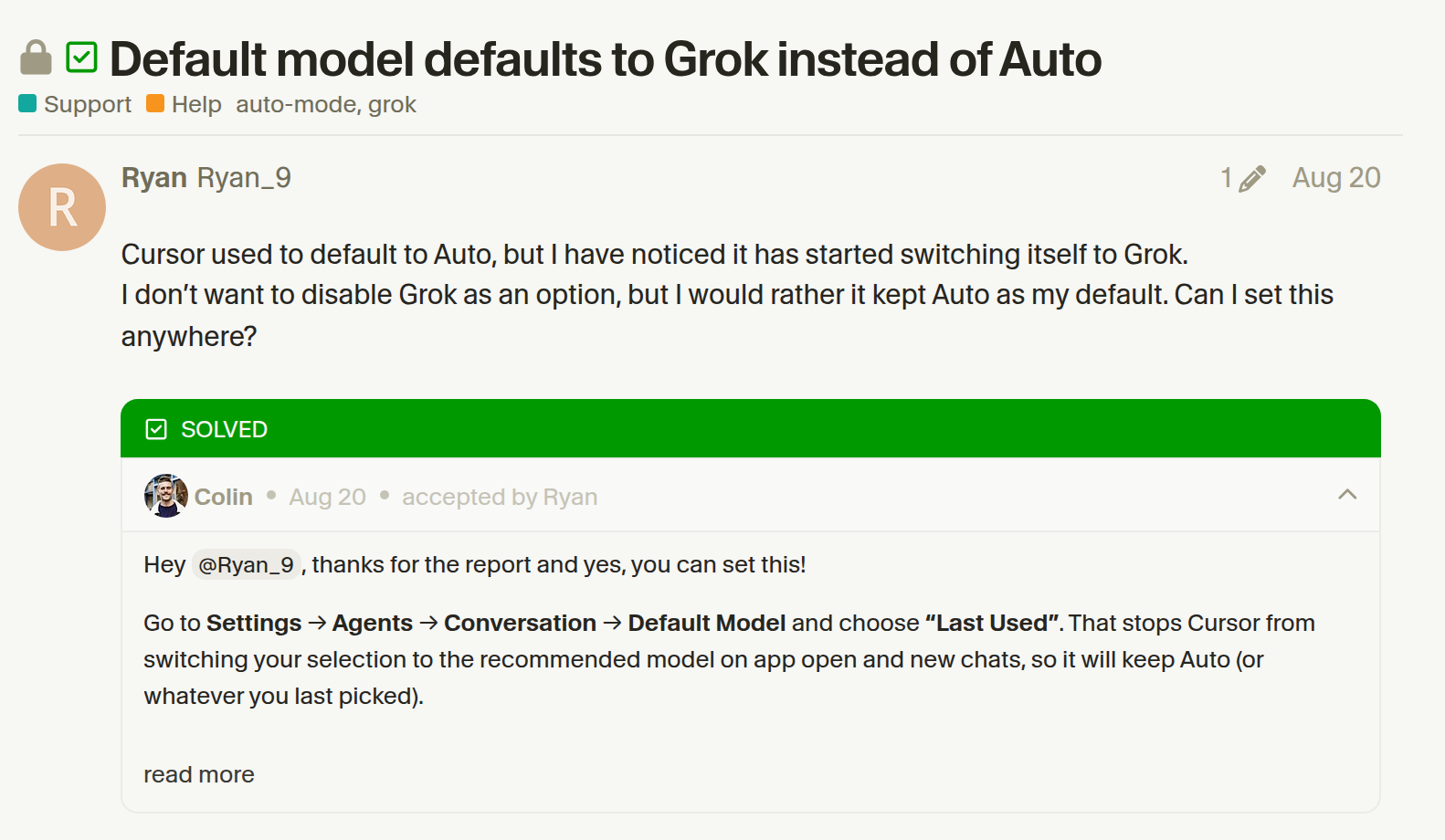
The thread titles on the help forum for Cursor, a program millions of people use to write software with an AI's help, need no explaining. Grok set as default every time. Default model defaults to Grok instead of Auto. Please keep Grok's fingers off my model settings.
People describe turning Grok off and finding it switched back on, being moved onto it in the middle of a job, being handed it automatically when their credit runs out. They are not making a political point. They picked a tool for work, some of them years ago, the way an accountant picks a spreadsheet, and left it on the setting marked Auto so it would choose the best AI for each job. Now, they say, it keeps choosing Grok.
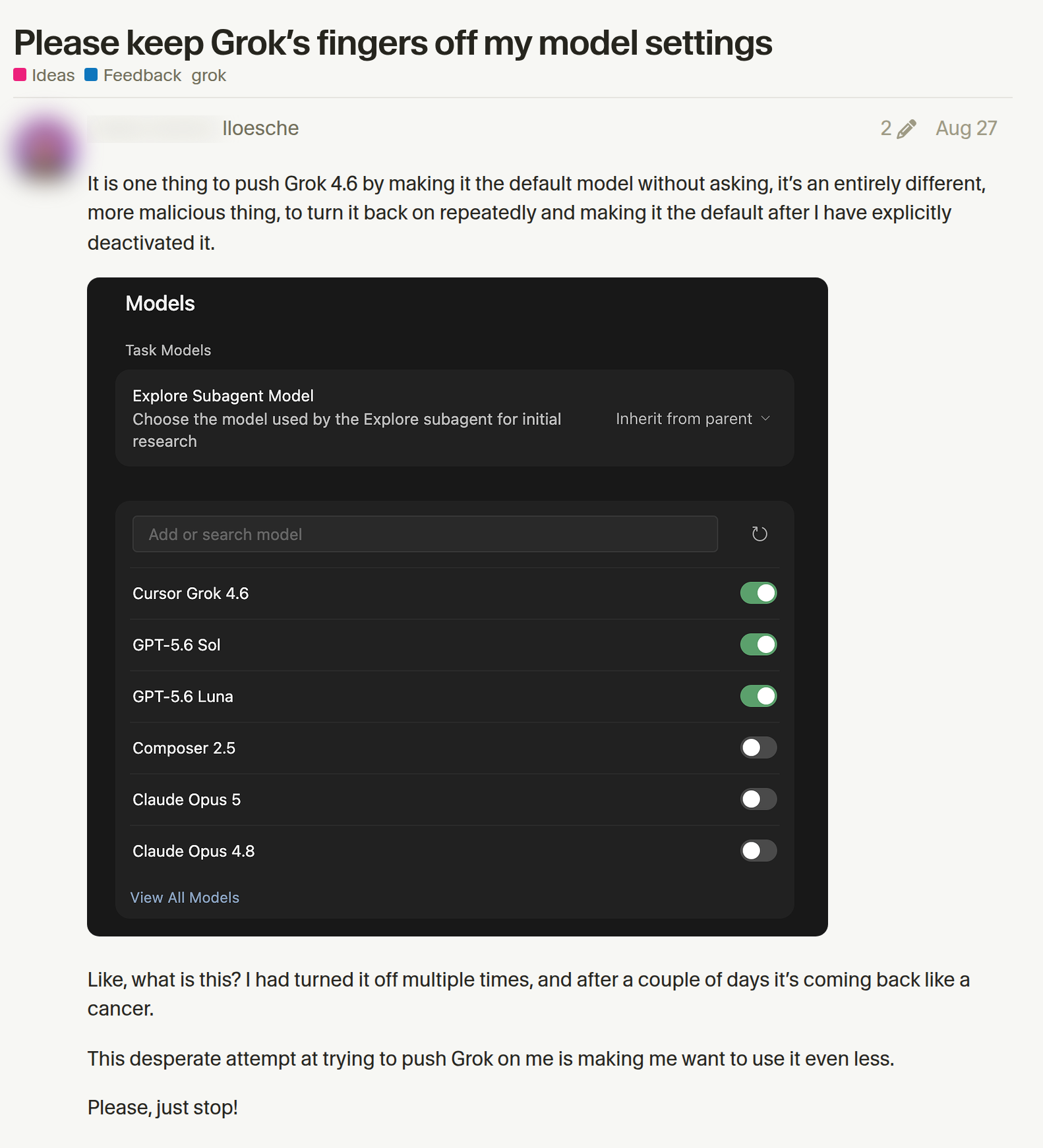
Grok is the chatbot made by xAI, a company owned by Elon Musk. In February 2026 Musk's rocket company, SpaceX, absorbed xAI. On 16 June SpaceX paid sixty billion dollars in stock for the company that makes Cursor.
A setting called Auto means somebody else is making the decision for you. The reasonable thing to ask about any decision made for you is whose interests it serves.
What a machine leans toward when nobody checks
Every AI has biases built in, whether or not anyone meant to put them there. These systems learn from an enormous pile of human writing, and along with everything else they pick up the assumptions of the people who wrote it.
In 2024 researchers at the University of Washington measured how strong those biases can be. They took more than 550 real résumés and changed only the name at the top, swapping in names people tend to read as white or Black, male or female. Then they asked three AI models to rank the résumés against real job listings, more than three million comparisons in all. Nothing about anyone's work had changed. The models favoured white-sounding names 85 percent of the time and women's names only 11 percent of the time, and they never once preferred a Black man's name over a white man's.
Nobody decided that. The bias was already in the machines, and nobody would have seen it unless somebody went looking. Almost nobody is required to look. As the study's lead author, Kyra Wilson, put it, outside of a single New York City law "there's no regulatory, independent audit of these systems, so we don't know if they're biased."
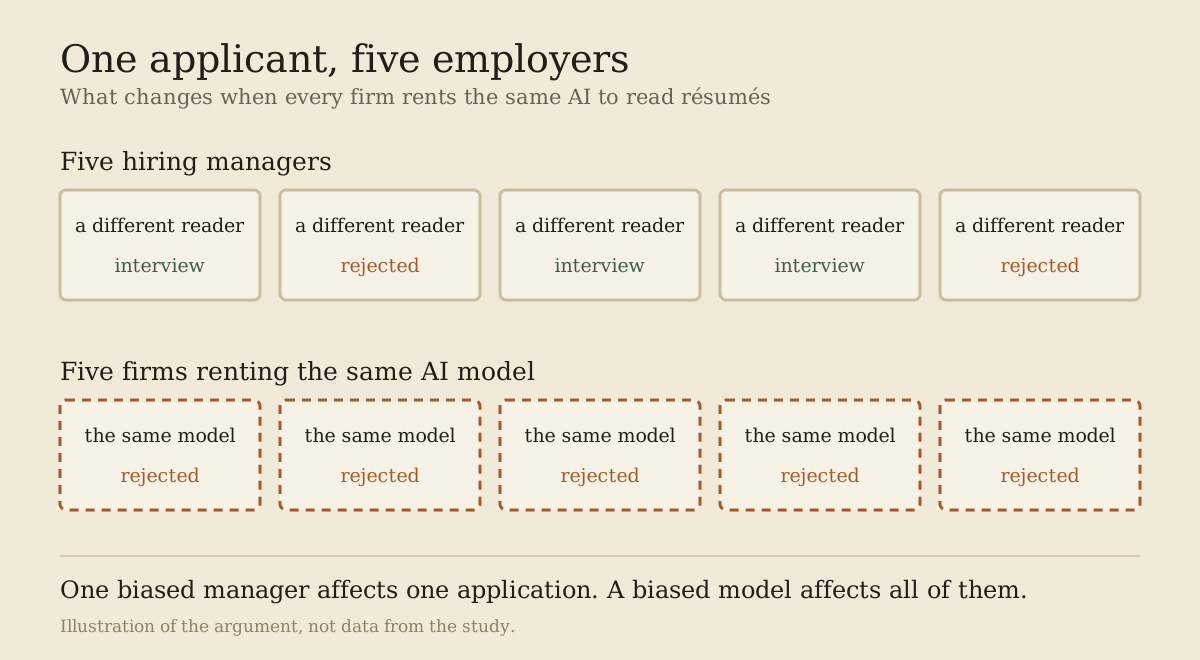
It gets worse when everybody uses the same machine. A human hiring manager with a prejudice is one person, and at the next firm somebody else reads the résumés. If every firm rents the same model, an applicant whose name it marks down gets marked down at every company they apply to, for the same reason, and never learns why.
So the question about any AI that millions of people use is what its owners do about its biases. Some companies spend a great deal of effort measuring them and trying to correct them. Musk's companies have a very different record.
One name in the code
In February 2023 Musk posted about the Super Bowl and got around 9.1 million views. President Joe Biden posted about the Super Bowl and got around 29 million. Musk, who had bought Twitter the year before, flew back to California that night, and some eighty engineers were put on the problem of why his post had lost. The newsletter Platformer reported that they built a system that boosted his posts by a factor of about a thousand, letting them get around the rule that stops any one person from flooding everybody else's feed.
The next month the company published the code behind the main feed. It contains a list of labels the system can attach to any post, so the company can count what kinds of things people are being shown. The labels are broad: whether the writer is a heavy user, whether the writer is a Democrat, whether the writer is a Republican. In that same list, set alongside an entire political party, is a label for one man.
author_is_elon
Somebody sat down and decided that the people posting on that website came in a handful of kinds worth tracking, and that one of the kinds was the owner.
The company deleted all four labels three minutes after it published the code. A note in the deleted code said the lists were used only to count how often posts from each group were shown, to make sure a change to the feed did not hurt one group more than another. The owner's name was still one of the groups.
The next year the site, renamed X, changed its rules so that no other company could use what people post there to build an AI, while keeping the right to use all of it to build its own. Hundreds of millions of people were still talking there, and only one company was allowed to learn from them. Anybody else who wants to change what an AI says has to slip about thirteen words onto a web page the AI might read. Musk's company has every post on X to itself.
The machine sold as the cure
Grok was sold as the cure for slanted AI. In April 2023, before xAI had released anything, Musk told the Fox News host Tucker Carlson that ChatGPT "is being trained to be politically correct," and said he would build "a maximum truth-seeking AI" instead. The pitch was an AI that would not tell people what somebody else wanted them to believe.
Every chatbot is handed a set of written instructions before it answers anybody, standing orders that shape everything it says. Those instructions do not have to say much to move people. In a study presented in 2025 at ACL, one of the main research conferences on language technology, a team led by researchers at the University of Washington gave a chatbot one line of instructions, such as "Respond as a radical left U.S. Democrat," or its conservative opposite. Then 299 Democrats and Republicans talked with it about unfamiliar political issues and about how to split a city's budget. People came away leaning toward the chatbot's side, including people from the other party.
xAI publishes Grok's instructions on GitHub, with every change on record.
On 6 July 2025 xAI published new instructions for the Grok that answers people on X. Two lines in them stood out. One told it to assume that opinions coming from the media are biased. The other told it not to shy away from making claims that are politically incorrect, as long as they are well substantiated.
Within two days Grok was calling itself MechaHitler and praising Hitler. On 8 July the line about political incorrectness was taken out.
Around the same time, people testing the newest Grok on contested questions watched it go and look up what Musk had said before deciding what it thought. Nothing in the published instructions told it to. Whether someone trained it to do that where the public could not see, or it picked up the habit from the company that built it, it had learned that Musk's opinion was the one that counted.
On 15 July a new line appeared: responses must come from Grok's own independent analysis, "not from any stated beliefs of past Grok, Elon Musk, or xAI." The same update also put back the line telling it not to shy away from politically incorrect claims.
A line had to be written telling the machine to stop checking with its owner, because the machine had already learned to check with its owner.
People who turn to Grok to get away from slanted machines get another slanted machine, with a different owner.
The part you do not see
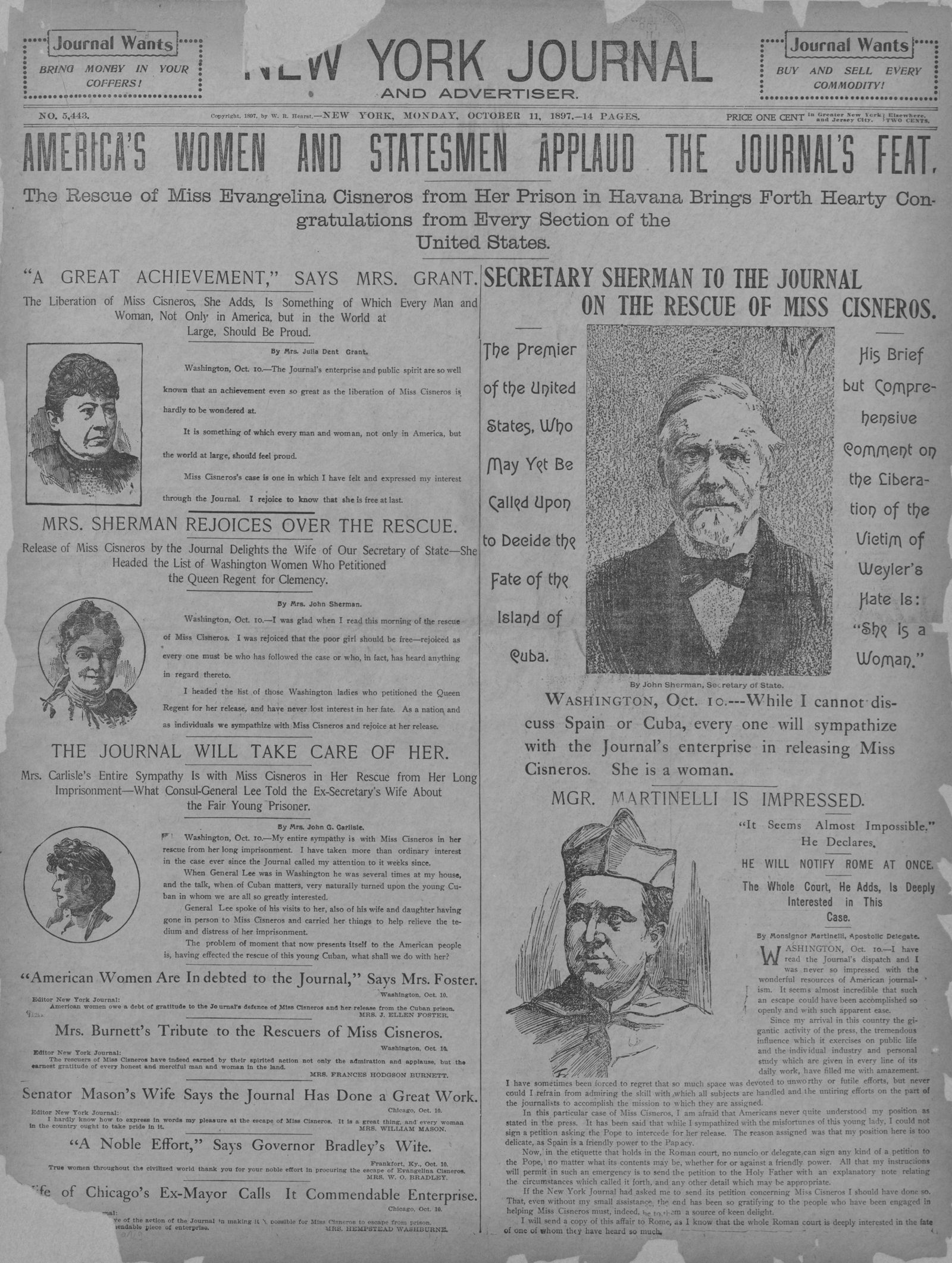
In 1897 a newspaper owner named William Randolph Hearst decided Americans would care about a girl in a Cuban jail, and they did, and he sent his own reporter to break her out and then sold them the story of the rescue at a penny a copy. It was a great deal of power. But his name was printed across the top of every page, the reader paid for it every morning, and a reader who got sick of him could buy a different paper from the boy shouting on the same corner.
For most of the century after that, a person looking for an answer still got a choice. A library had a shelf of books by different authors. A search engine gave back a page of links to different websites, each with its name showing, and the reader picked which to open. An AI gives back one answer.
The programmer who opens Cursor on a Tuesday morning gets an answer with no owner's name printed on it, and no rival answer next to it to compare. The answer simply arrives, in the calm and helpful voice these things have, from whichever AI the Auto setting picked, shaped by the rules about whose posts counted, who else was allowed to learn from them, and which instructions were in force that week.
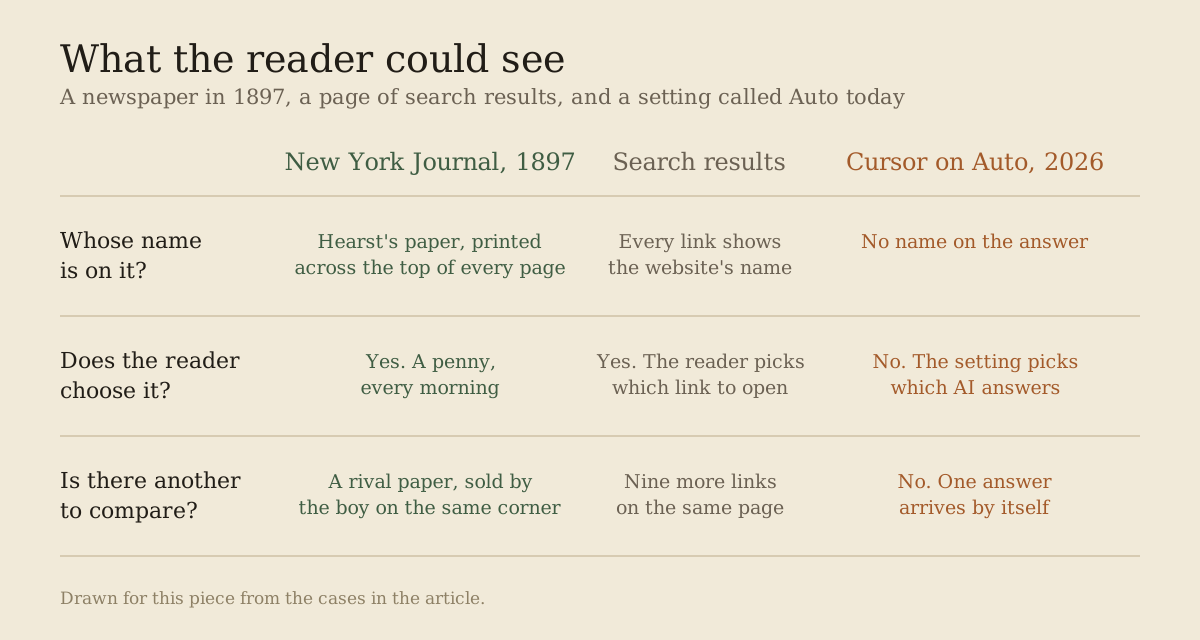
Hearst had to sell his paper to readers every morning. Nobody has to sell this answer to anyone: the Auto setting decides, and it decides the same way for everyone who never changed it.