The Internet Is Mold in the Shape of the Internet
In January 2021 somebody on a forum almost nobody read wrote that most of the internet was already fake, and that the government was doing it. He was wrong about who and wrong about why. Almost half the traffic is machines now.
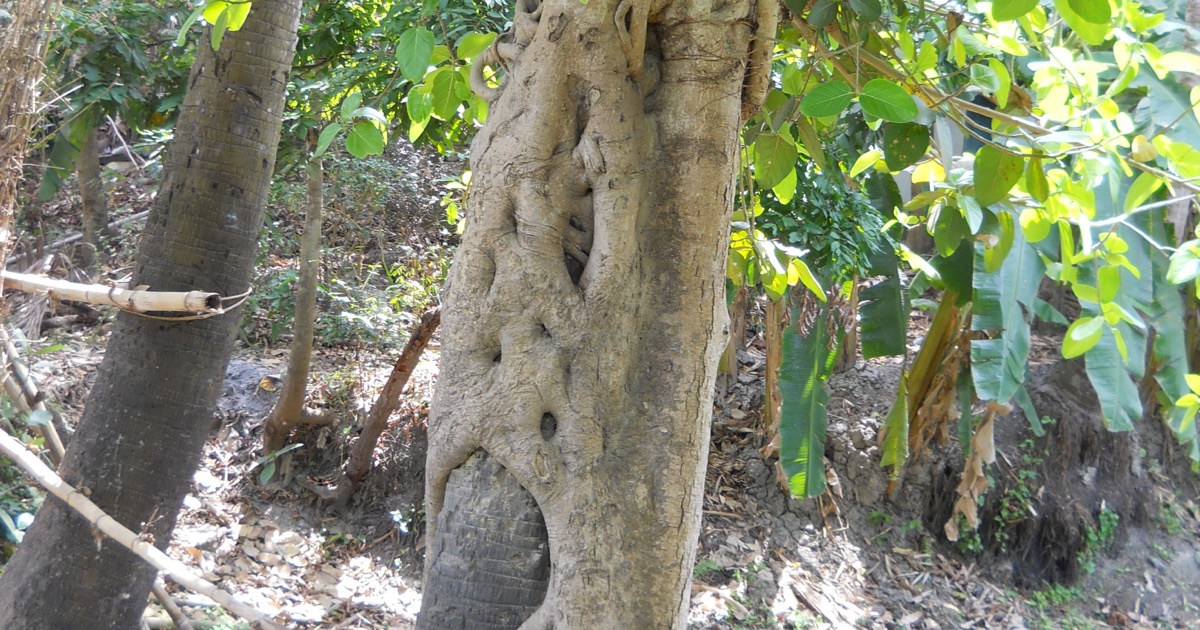
A strangler fig begins high in somebody else’s tree.
A seed lands in a fork of bark. The young plant drinks what collects there. It sends roots down toward the ground and branches up toward the light. For years the old tree does the holding. From the path it can still look like the same tree.
Then the roots reach earth. They thicken. They close around the trunk that carried them. The fig gets its own food and its own frame. Sometimes the first tree dies inside it. Sometimes what remains is hollow: an outline wearing the shape of what used to be alive there.
Martin Fowler borrowed that plant to describe a way of replacing old software without a single violent cutover. A new piece takes one small job. It sits beside the old machinery, uses the old routes, takes another job, and keeps going. At the end the service can still have the same sign over the door, and every working part inside it has been changed.
There is a homelier version of the same shape, and it is probably in the kitchen right now. A loaf starts to go. The mold is small at first and keeps to the crust, and the bread is still bread. Then it works inward. What it eats it turns into more of itself, so the loaf does not shrink while it is being consumed — it is replaced, crumb by crumb, by the thing doing the consuming. At the end there is an object on the counter the size and shape and color of a loaf of bread, and none of it is bread.
So the question to ask about the places people write in is not whether anything is still standing. It is whether there is anything left inside it.
Somebody asked that question early, and got it mostly wrong in an interesting way.
On 5 January 2021, a user calling himself IlluminatiPirate posted an essay to the esoteric board of a forum named Agora Road’s Macintosh Cafe. He titled it “Dead Internet Theory: Most of the Internet is Fake.” It ran to manifesto length. It argued that the open internet people thought they were using had already been quietly replaced by bots and automated curation, that the humans were mostly gone, and that what was left was a convincing shell being operated at them. Kaitlyn Tiffany wrote it up for the Atlantic that August, under a headline noting that the internet had supposedly died five years earlier and nobody had mentioned it.
The essay also claimed the United States government was running the whole arrangement in order to manage the world’s population. That half is a conspiracy theory and can be left where it was found. It is the reason the rest of it was filed as a joke.
Then the arithmetic turned up on its own. By 2024 the security firm Imperva was reporting, in its annual survey of automated traffic, that almost half of all internet traffic came from non-human sources, with roughly a third of the total coming from the kind of bots nobody wants. Traffic is not writing, and a crawler fetching a page is not a person pretending to be one. But it is the first measurement anybody took of the loaf, and it did not come back reassuring.
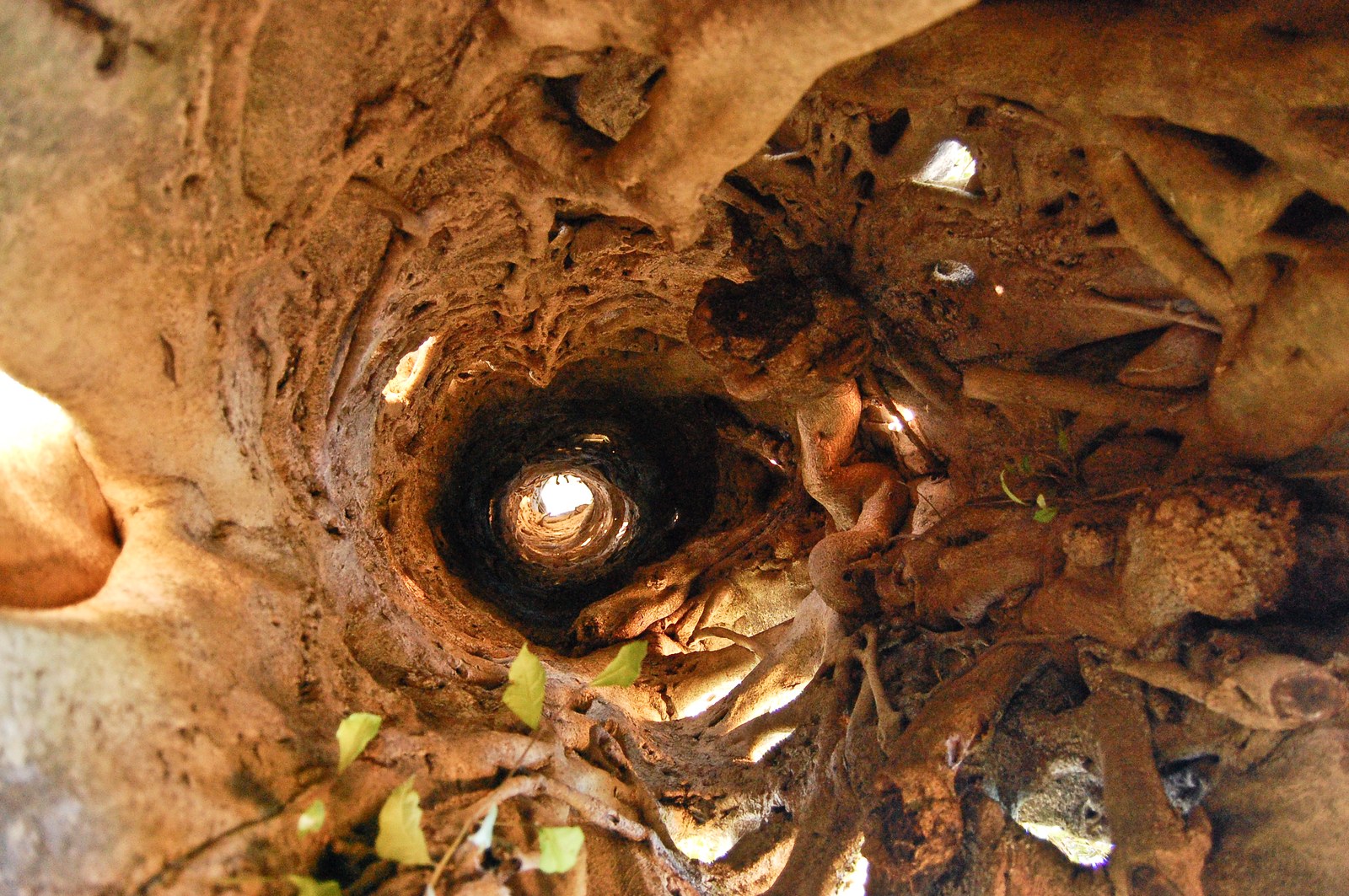
He was right about the destination and wrong about every road leading to it. There was no committee. Nobody had to decide. The replacement is happening the way mold happens, which is to say for ordinary reasons, by things that are only feeding — and arriving somewhere by accident does not make the arrival any less complete.
How the heap gets fed on purpose is its own story.
A strangler fig takes decades, and leaves behind something a person can walk up to and photograph. It is a slow enough process that the tree is usually described as the thing that matters, right up until the part where there is no tree.
The shape is the last thing to go. It is also the only part anybody checks.